


Future of Recycling Takes Shape by 2036
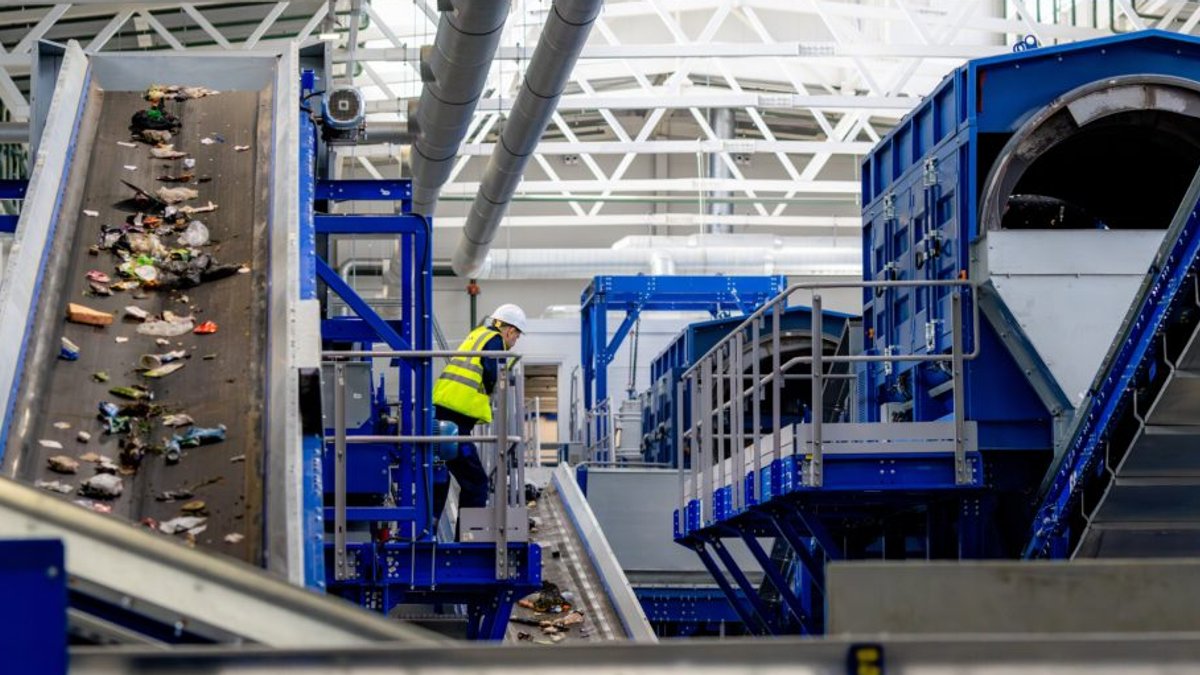
Recycling technology is expanding globally, with manufacturers preparing for a future where artificial intelligence, automation, and critical raw material recovery become standard features of recycling plants. According to Recycling International’s latest global survey, conducted among 55 established recycling technology providers, this shift is already underway.
Collectively, the respondents supply equipment to over 20 countries each, with several operating in up to 60 markets worldwide. Recent deliveries have been made in countries such as Australia, Brazil, China, Morocco, Finland, India, Japan, Ghana, the UAE, Canada and the US.
The Middle East & Africa region holds a fast-growing market share of the global recycling technology market, at almost 10%. Latin America’s market share is 5.5%, while the Asia Pacific region dominates with a share of 35.6%.
North America and Europe follow, with market shares of 28.3% and 20.8%, respectively. These numbers indicate the increasingly international nature of the recycling equipment sector.
Several companies are unveiling new technologies designed for emerging waste streams. Dutch manufacturer Bronneberg has introduced the Garner DiskMantler, an automated system that dismantles hard disk drives without shredding them.
This technology recovers high-purity fractions while isolating valuable neodymium magnets, helping strengthen Europe’s critical raw materials supply. German company Stadler has launched the Air Drum Sifter and is expanding its AI-powered StadlerConnect platform.
Related: Drought Hits Dutch German Recyclers’ River Transport Costs
Stadler reports that connected plants have already increased material yields by up to 18% while reducing unplanned downtime through predictive maintenance and adaptive process control.
Italian companies are also developing new technologies, with For Rec targeting the photovoltaic recycling market with a dedicated processing solution for end-of-life solar panels, and Iris-Mec responding to new European vehicle legislation with an advanced depollution line for hybrid and electric vehicles that places digital traceability at its core.
Julia Stadler of Stadler expects recycling plants to become much more digital, connected, and specialized by 2036. AI is already transforming operations, turning recycling facilities into data-driven ‘smart factories’.
Peter Funke, CEO of sorting specialist Steinert, agrees that advanced sorting technology will become a necessity as demand for high-quality secondary raw materials continues to rise. He notes that AI will bring major productivity gains in the next ten years.
Votechnik’s CEO Lisa O’Donoghue believes recycling will become a strategic pillar of Europe’s critical raw materials supply chain.
They will provide further insights into the industry’s future developments in the upcoming edition of Recycling Technology.

Drought Hits Dutch German Recyclers' River Transport Costs


