


Wind assisted LNG carrier design developed
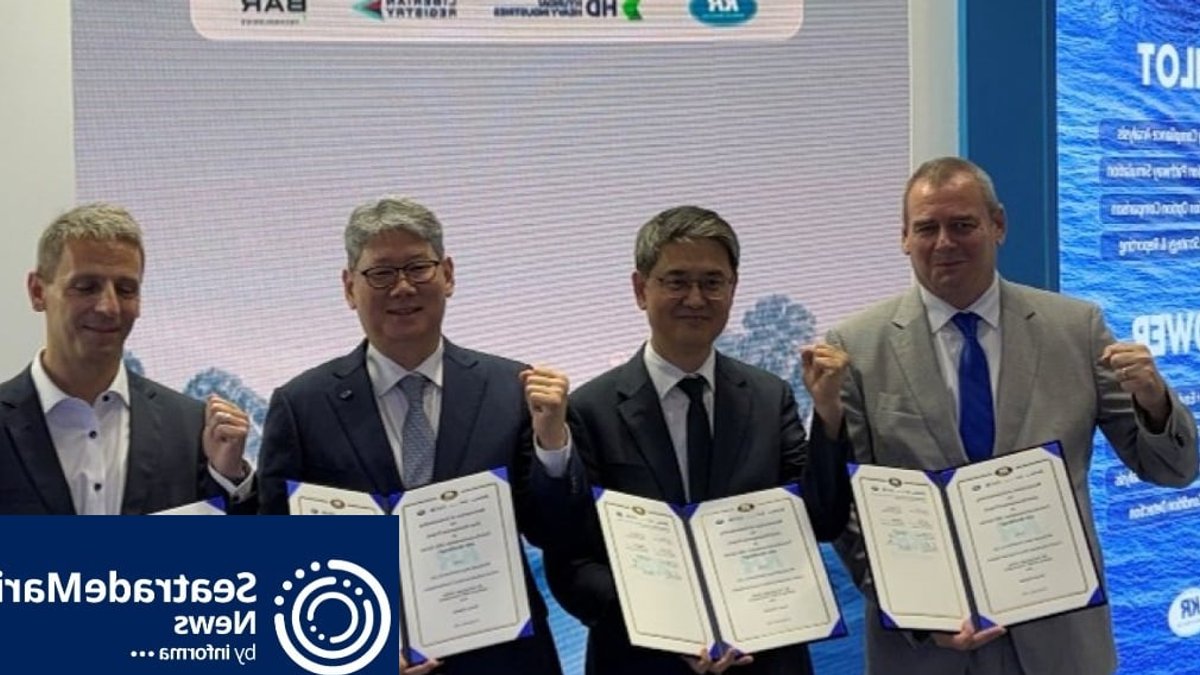
UK-based wind propulsion technology company BAR Technologies has teamed up with class, flag, and shipyard partners to develop a wind-assisted LNG carrier. The company will jointly develop a 174,000 cu m LNG carrier featuring its WindWings propulsion system in partnership with the Liberian International Ship & Corporate Registry (LISCR), based on a design developed by HD Hyundai Heavy Industries (HD HHI).
The vessel layout has a forward accommodation arrangement, freeing space on the upper deck for the WindWings system. Under a memorandum of understanding signed at GasTech, HD HHI will lead on basic vessel design and design review, with BAR Technologies contributing technical data on the arrangement and specifications of WindWings, structural strength, operational concepts and expected fuel savings.
Read Also: Shipping Council Pushes for Stricter Lithium Battery Transport Rules
Development and Assessment
The design will be assessed against rules and international requirements by Korean Register and LISCR, who will also examine its safety and technical suitability. A successful assessment could see Korean Register grant Approval in Principal to the design. This is not the first time LISCR and Korean Register have collaborated on wind propulsion, having granted approval in principle in 2024 to a Samsung Heavy Industries design for a wing sail-equipped LNG carrier.
Commenting on the BAR technologies MoU, Hongryeul Ryu, chief technology officer of HD HHI, said: “We have continued to develop innovative hull forms and arrangement concepts for LNG carriers to advance environmentally friendly ship technologies. Through this project, we aim to integrate wind-assisted propulsion technology into our forward accommodation LNG carrier design, further enhancing the competitiveness of next-generation, low-emission LNG carriers.”
Wind-Assisted Propulsion Technology
John Cooper, CEO of BAR Technologies, said: “We already have WindWings deployed across 10 bulkers and tankers, with 23 WindWings collectively saving approximately 100 tonnes of CO₂ per day. We look forward to extending the application of WindWings to next-generation gas carriers, establishing a robust foundation for safe commercialisation, and providing shipowners with a genuinely attractive environmental solution.”
Read Also: Indian Ship Recycling Capacity Plunges Amid Regulatory Delays
Kyujin Yeon, executive vice president of KR, said: “Through this joint development project, KR will assess the safety and technical suitability of applying wind-assisted propulsion to this LNG carrier design against applicable rules and international requirements, with a view to granting Approval in Principle. By working closely with the shipyard, technology provider and flag administration, KR will continue to support the safe and reliable adoption of innovative technologies that contribute to the maritime industry’s decarbonisation.”
Industry Partnerships
Alfonso Castillero, CEO of the LISCR, added: “This joint development project reflects the Liberian Registry’s proactive approach to supporting the safe and responsible advancement of innovative maritime solutions. By assessing wind-assisted propulsion for LNG carriers from an early design stage, the partners can help translate the decarbonisation challenge into practical opportunities for improved efficiency, future-ready ship designs and competitive advantage, without compromising safety or quality.”

Shipping Council Pushes for Stricter Lithium Battery Transport Rules


