


Global Shipping Faces Dual Threats
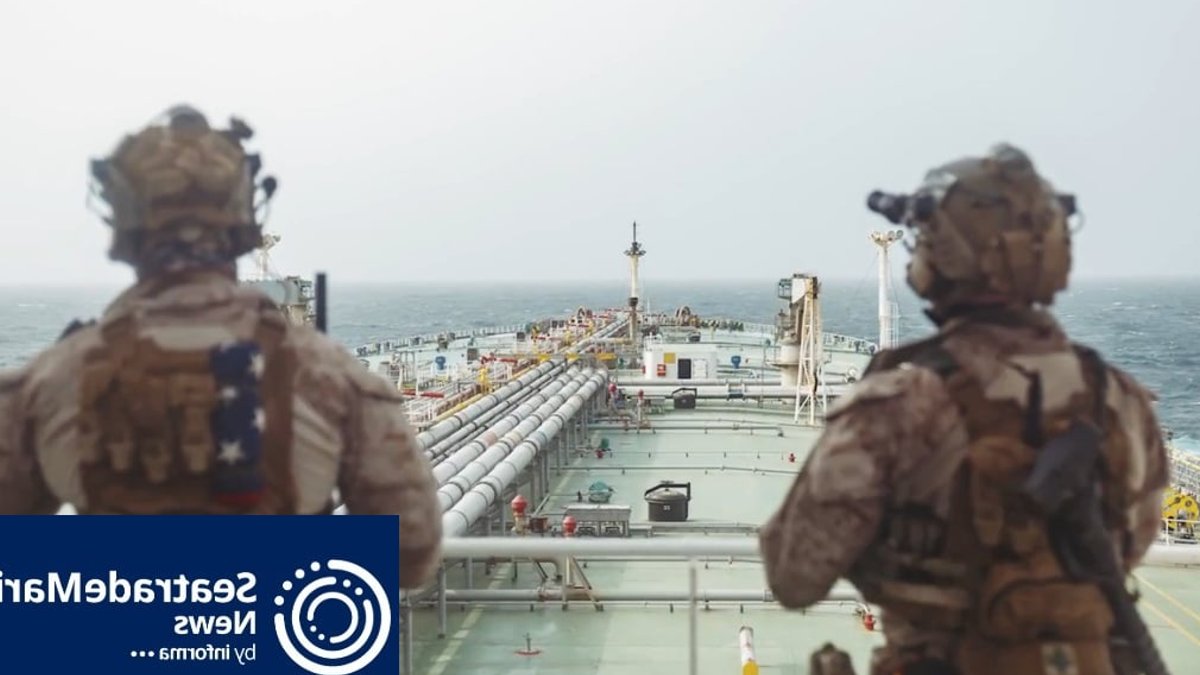
Maritime security analysts are watching a convergence of crises in the Persian Gulf and the Red Sea. The Strait of Hormuz and the Bab al-Mandeb Strait have both become active fronts in regional conflicts, creating a dual chokepoint situation the shipping industry has not faced in living memory.
Strait of Hormuz becomes a war zone
The Strait of Hormuz has been the epicenter of hostilities for over six months, following the US-Israeli campaign against Iran that began in late February. What started as an air war has increasingly shifted to a maritime conflict.
In the past ten days, Washington and Tehran have exchanged direct strikes on tankers. American forces targeted Iranian government-linked crude carriers, and the Islamic Revolutionary Guard Corps (IRGC) retaliated against vessels it deems US-linked. Reports indicate the IRGC also launched a ballistic missile toward US carrier groups patrolling the waterway.
For the first time, Iran has used anti-ship ballistic missiles fired from its interior against naval targets in the strait. This represents a significant technical escalation from the drone and mine warfare that characterized earlier phases of the conflict.
Read Also: Envalior and Secara Partner to Boost PCR in Automotive Sector
The human and commercial toll is no longer abstract. Merchant vessels have been mined, hit by missiles, and abandoned mid-transit. Seafarers have been killed and injured simply for being in the wrong shipping lane at the wrong time. These mariners have no stake in the underlying conflict and operate ships that carry no weapons and cannot maneuver out of danger the way a warship can.
A 300,000-tonne Very Large Crude Carrier laden with crude is, in every practical sense, defenseless. It cannot outrun a missile, it cannot return fire, and its only real protection is the decision, taken in a shipowner’s office thousands of miles away, of whether to send it into the strait at all.
That calculus has visibly shifted. Transits through Hormuz have fallen dramatically from pre-war norms. Vessels that do go through increasingly rely on improvised protective arrangements like naval escorts, mine-clearance corridors, and short-lived diplomatic frameworks between Iran and Oman that open and close within weeks. War risk insurance, which sat at a fraction of one percent of hull value before February, has at various points this year been quoted as high as ten percent. This turns what was once a rounding error in voyage economics into a line item that can run into the millions of dollars per transit for a single VLCC.
Red Sea threats emerge
Until recently, the Red Sea and Bab al-Mandeb were the “quieter” of the region’s two flashpoints. Houthi attacks on commercial shipping largely paused since the Gaza ceasefire of late 2025. That calm has now broken.
Fighting between the Saudi-backed Yemeni government and the Houthis shattered a years-long informal truce in July. The Houthis escalated sharply this week by striking energy and civilian infrastructure deep inside southern Saudi Arabia. They hit facilities near a major refinery at Jazan and reportedly wounded over seventy people.
Read Also: EU ELV rules warn US recyclers
The Houthis have declared a maritime blockade against Saudi Arabia. They are warning shipping lines against calling at Saudi ports. The strategic logic here matters as much as the violence itself.
With Hormuz effectively throttled, Saudi Arabia has been forced to route dramatically more of its crude exports through its Red Sea terminals and the Bab al-Mandeb Strait. This reportedly involves several multiples of last year’s volumes over the same months. This makes the southern Red Sea corridor newly valuable, and newly targetable, at precisely the moment the Houthis have both the motive and, through their alignment with Iran, the coordination to make it costly.
What was previously a Gaza-linked campaign against Israeli-affiliated shipping is showing signs of becoming a broader instrument in a wider regional confrontation.
Two valves constrained
Global shipping has always had a release valve for chokepoint risk: if one route becomes unsafe, tonnage reroutes to another, or around it entirely. When the Red Sea became dangerous in 2023-24, the industry absorbed the shock by sending container ships around the Cape of Good Hope. When Hormuz has flared this year, some cargo has shifted to pipeline alternatives, ship-to-ship transfers outside the strait, or simply waited out the worst of it.
Read Also: Data First, Policy Later
What happens when both valves are constrained at once? A tanker that cannot safely load or transit at the top of the Gulf and cannot safely discharge through the Red Sea corridor is left with very few good options. The long haul around Africa becomes the only viable path. This occurs at a time when war risk premiums, insurance exclusions, and crew hazard pay are already raised across the entire region.
The Joint War Committee and the International Bargaining Forum have both had to repeatedly redraw their designated high-risk areas this year to capture a threat picture that keeps expanding rather than contracting.
The costs of operating through — or around — these two chokepoints do not stay with the shipowner. These costs are passed through freight rates to charterers, then to crude and product prices, then to refiners, and finally to the cost of everything that depends on refined fuel and petrochemical feedstocks. That is nearly everything that moves. A VLCC transit that once cost a few hundred thousand dollars in war risk cover has, at points this year, approached the value of a mid-sized cargo itself. This is not a marginal cost adjustment; it is a structural repricing of the voyage economics that global energy trade has been built on for decades.
Permanent recalibration
Freight and insurance markets have entered a new baseline, not a temporary spike. Even a ceasefire tomorrow would not fully unwind the caution now built into underwriting models, crew bargaining agreements, and charterer risk appetite. Markets that have been burned twice in two years will price in a standing risk premium for the region for years to come.

Envalior and Secara Partner to Boost PCR in Automotive Sector


