


Sanctioned Russian firm linked to tanker salvage
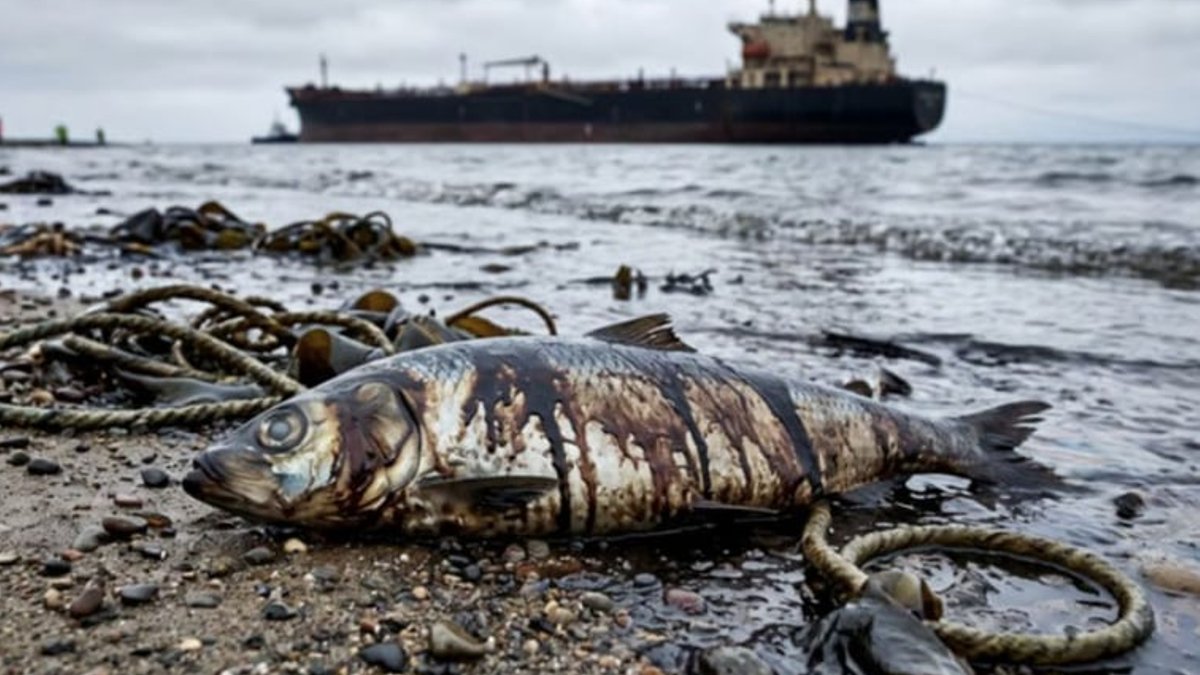
The Caroline Bezengi, a stricken Suezmax tanker leaking oil off Oman’s coast, has found an unexpected financial backer: a sanctioned Russian insurer.
AlfaStrakhovanie, one of Russia’s largest insurers, is funding the salvage operation. Salvors required a sanctions waiver to access the funds, as the insurer was designated by the EU and UK for covering vessels transporting Russian crude.
Related: Three producers leave firm amid client poaching claims
The ship’s condition worsens as monsoon season hits
The vessel has deteriorated since the grounding. Seven of its 12 cargo tanks are now leaking, and the stateless ship risks breaking apart in 40-knot winds and four-meter swells tied to Oman’s Khareef monsoon. We haven’t independently verified the tank-by-tank count or the wind and swell figures beyond Lloyd’s List’s reporting, so treat those specific numbers as attributed to that outlet for now, pending confirmation from Omani authorities or the salvors themselves.
Risk consultancy Ambrey has contracted an international oil-spill response firm and deployed vessels, aircraft and roughly 100 tons of equipment. The slick has spread to over 2,000 square kilometers, threatening about 40 kilometers of Omani coastline near Ras Madrakah and potentially Masirah Island. That’s well above the roughly 390 square kilometers reported earlier this month, and it doesn’t line up neatly with earlier estimates from Greenpeace Germany (around 600 square kilometers) or the Dutch watchdog PAX (as high as 800 square kilometers). Oman’s Environment Authority confirmed this week that oil has now reached the mainland coast, not just open water.
A sanctioned insurer steps in where others wouldn’t
AlfaStrakhovanie’s role reflects changes in maritime insurance. Since 2022, Western Protection & Indemnity clubs—part of the International Group, which covers most ocean-going tonnage and can access pooled reinsurance up to $1 billion per pollution incident—have largely withdrawn from Russian-linked business. Domestic Russian insurers and state-linked reinsurers have filled the gap, though their financial capacity and transparency remain unclear.
Related: Dual Expands Capacity Eyes Mid‑Corporate Construction Clients
This situation is not unique. Vessels carrying Russian crude are far less likely to have International Group cover. AlfaStrakhovanie and its peer Ingosstrakh often appear in shadow-fleet policies, frequently without disclosed terms.
The incident tests what happens when a vessel outside the mainstream system suffers a major casualty. Salvage efforts remain difficult. Ambrey described the conditions as “extremely challenging” due to monsoon fog, rain, and swells.

Three producers leave firm amid client poaching claims


