


Bayram finds his calling in scrap recycling
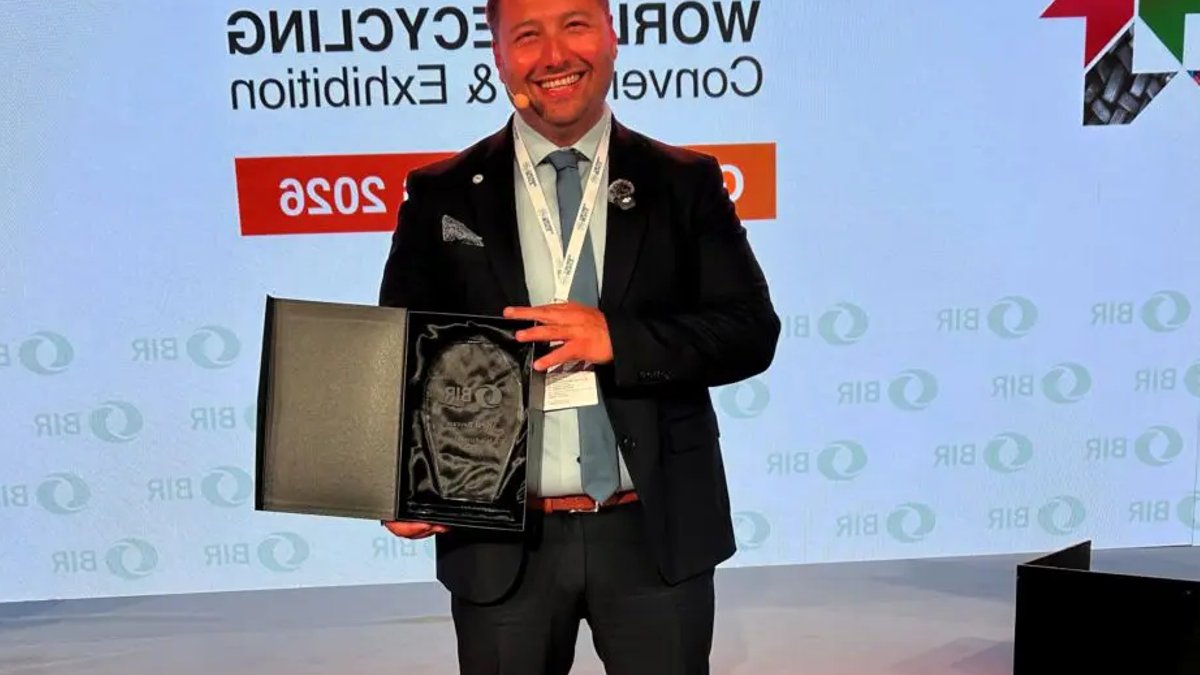
Murat Bayram, a prominent figure in non-ferrous scrap recycling, received the Bureau of International Recycling’s Non-Ferrous Legend award at its convention in Gothenburg, Sweden. The honor recognizes individuals who have made a lasting impact on the sector, not only through professional achievements but also by embodying the principles that define the industry’s global community. The award ceremony, held in a packed convention hall, showed the significance of Bayram’s contributions, which extend beyond operational success to shaping the cultural and ethical foundations of metal recycling. His selection as only the second recipient of this title reflects the BIR’s commitment to celebrating leaders who raise the industry’s reputation while driving meaningful change.
A legacy built on values, not just metals
Bayram, director of non-ferrous at European Metal Recycling, called the award “deeply humbling” during his acceptance speech. He acknowledged others in the industry who had dedicated decades to its growth, suggesting they were equally deserving. His remarks were not merely a gesture of modesty but a reflection of the collaborative spirit that defines the sector, where knowledge and innovation are often shared across borders. The BIR’s decision to honor Bayram also highlighted his role in bridging gaps between different segments of the industry, from large-scale recyclers to smaller, family-owned operations that form the backbone of local supply chains.
“This industry is more than just a profession—it’s a part of my identity, a part of my soul,” he said. The sentiment resonated with attendees, who responded with sustained applause. For many in the audience, Bayram’s words captured the personal investment required to thrive in an industry characterized by volatility and complexity. The non-ferrous scrap sector, in particular, demands a deep understanding of global market trends, regulatory settings, and technological advancements, all of which Bayram has handled with a focus on sustainability and ethical practices. His leadership at European Metal Recycling, one of the largest metal recycling companies in the world, has been marked by initiatives that prioritize transparency and long-term value over short-term gains.
In his role, Bayram also serves as president of the German metal recycling association VDM and contributes to the BIR Academy, helping develop accessible training resources for recyclers. His involvement with the VDM has been instrumental in advocating for policies that support the industry’s growth while addressing challenges such as illegal exports and unfair trade practices. Under his guidance, the association has worked to strengthen ties between German recyclers and international partners, ensuring that local businesses remain competitive in a global market. Meanwhile, his work with the BIR Academy has focused on democratizing education within the industry, making specialized knowledge available to recyclers at all levels. The academy’s programs cover topics ranging from technical best practices to regulatory compliance, equipping professionals with the skills needed to adapt to an evolving setting.
The human side of recycling
Bayram framed the industry as a global network bound by shared principles. “Our metals travel around the world, but our values travel with them,” he said. “Respect, trust, responsibility, humanity—these are the things that matter.” His emphasis on values reflects a broader shift within the industry, where stakeholders increasingly recognize that success is not measured solely by profit margins but by the positive impact on communities and the environment. The non-ferrous scrap trade, which includes metals like aluminum, copper, and zinc, plays a critical role in reducing the need for virgin mining, thereby lowering carbon emissions and conserving natural resources. Bayram’s perspective aligns with growing consumer and regulatory demands for circular economy practices, where materials are continuously reused rather than discarded.
He reserved particular praise for those behind the scenes. “The real heroes aren’t the people on the stages,” he said. “They’re the ones who wake up early, survive crises, solve problems under pressure, build companies, create jobs, and keep materials in circulation.” This acknowledgment of the industry’s unsung contributors highlights the often-overlooked labor that sustains the global supply chain. From workers sorting materials in recycling facilities to logistics teams ensuring timely deliveries, each role is essential to maintaining the flow of metals that power industries ranging from automotive manufacturing to renewable energy. Bayram’s words also served as a reminder of the resilience required to handle the industry’s inherent challenges, such as price fluctuations, geopolitical tensions, and shifting trade policies.
Related: Entertainment risks insurers often miss
For Bayram, recycling represents more than material recovery. It’s a philosophy of renewal. “Things can come back stronger,” he said. “They can have a second life. Nothing is finished.” This belief in the transformative power of recycling extends beyond the physical properties of metals. It speaks to the industry’s potential to drive economic and social change, particularly in regions where access to raw materials is limited. By recovering and reprocessing metals, recyclers not only reduce waste but also create opportunities for local economies to thrive. Bayram’s vision of a circular economy is one where materials are continuously cycled back into production, reducing reliance on finite resources and minimizing environmental degradation.
His speech also carried a call to action. He pledged to advocate for free trade, fair competition, and unity within the industry. “Recycling isn’t just about metals,” he concluded. “It’s about people.” This commitment to people encompasses both the workforce and the communities affected by recycling operations. Bayram has been a vocal proponent of fair labor practices, ensuring that workers are treated with dignity and provided with safe working conditions. His advocacy also extends to supporting inclusivity within the industry, encouraging greater participation from underrepresented groups and promoting diversity in leadership roles. By emphasizing unity, Bayram seeks to counter fragmentation within the sector, where competing interests can sometimes hinder collective progress.
The award marks only the second time the BIR has conferred the Non-Ferrous Legend title. Bayram joins a short list of recipients whose contributions have shaped the sector’s direction. The first recipient, whose identity remains closely tied to the industry’s early modernization efforts, set a precedent for recognizing leaders who combine technical expertise with a commitment to ethical standards. Bayram’s selection reflects the BIR’s evolving criteria for the award, which now places greater emphasis on leadership that addresses contemporary challenges such as climate change and digital transformation. His work has demonstrated how traditional recycling practices can be adapted to meet the demands of a rapidly changing world, from incorporating advanced sorting technologies to developing new markets for recycled materials.
Outside the convention hall, the industry continues to grapple with fluctuating commodity prices and regulatory pressures. Yet Bayram’s remarks showed a persistent optimism—one rooted in the belief that recycling, at its core, is a human endeavor. The non-ferrous scrap market is particularly sensitive to global economic trends, with prices influenced by factors such as industrial demand, geopolitical stability, and currency fluctuations. Regulatory pressures, including stricter environmental laws and trade restrictions, add another layer of complexity. Despite these challenges, Bayram’s leadership has focused on building resilience within the industry, encouraging recyclers to diversify their operations and invest in innovation. His optimism is not naive but grounded in the industry’s proven ability to adapt, as seen in its response to past crises such as the 2008 financial downturn and the COVID-19 pandemic.
Whether that belief translates into broader policy shifts or sustained industry growth remains an open question. For now, the award stands as a recognition of what one person’s dedication can achieve in a field often defined by its scale, not its stories. Bayram’s influence extends beyond his immediate roles, as he has become a trusted voice in international forums where the future of recycling is debated. His advocacy for free trade, for instance, has resonated in discussions about harmonizing global standards for recycled materials, which could reduce barriers to cross-border trade and increase the efficiency of recycling systems. Similarly, his emphasis on education has inspired collaborations between industry associations, academic institutions, and governments to develop curricula that prepare the next generation of recyclers. While the long-term impact of these efforts is still unfolding, Bayram’s award serves as a reminder that progress in recycling is not just about technology or policy but about the people who drive it forward.

Entertainment risks insurers often miss


